
Can You Recycle Rare Earth Magnets?
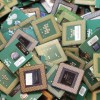
How many electronic devices do you use on a daily basis? With headphones, cell phones, hard drives, and electric motors the answer might be countless. You’ve also probably replaced and upgraded your devices innumerable times. As you burn through all of that technology, consider the parts of the devices. Rare Earth magnets are key ingredients in many electronic devices. These small, powerful magnets are named for the rare Earth elements they contain. The name is historical: these elements are not especially scarce in Earth’s crust, but economically workable deposits are limited. Because these elements are difficult to find in mass naturally and are also in high demand, many companies tried to develop efficient methods for recycling the elements from used products.
Recycling Rare Earth Magnets
Previously, recycling rare Earth magnets was not feasible or environmentally safe. Electronics use small amounts of a wide variety of elements making them extremely difficult to separate. In fact, for small consumer electronics it has generally been easier and less expensive to continue mining rare Earth elements from a limited supply of rock than it is to recycle the rare Earth materials we’ve already used. In practice, most used electronics ended up in landfills.
Now, however, researchers at the University of Pennsylvania may have developed an efficient method for recycling rare Earth magnets from electronics. It used to take so long to recycle magnets that it wasn’t worth the trouble. Now, with the method developed by the team at the University of Pennsylvania, the separation process is much faster and may be more cost effective. The research team added a metal-binding molecule called ligand to a powder mixture of neodymium and dysprosium. Neodymium and dysprosium are both used to make rare Earth magnets. Because neodymium ions are slightly larger, the ligand opens up more around them, so two neodymium-ligand complexes join together and dissolve. The dysprosium complexes stay separate and do not dissolve, which makes the two elements easier to separate from each other.
The method was published in 2015 in Angewandte Chemie International Edition and has been demonstrated in laboratory experiments. It is a step in the right direction for recycling rare Earth magnets, though it has not been shown to be commercially adopted. According to the UN Global E-waste Monitor 2024, the world produced a record 62 million tonnes of e-waste in 2022. With improved separation and recycling methods, we can reduce the e-waste that ends up in landfills and reuse precious rare Earth magnets.
If you’re looking for other ways to recycle your magnets, check out this DIY about repurposing unwanted refrigerator magnets.
Image by Ekolist

-
Gauss Spectrum Magnetic Field Viewer Film - 8 x 11.75
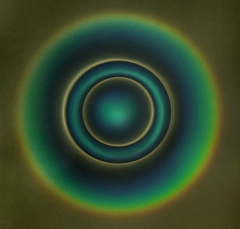
- 1 Piece Gauss Spectrum Magnetic Field Viewer Film
- Display relative gauss strength in a spectrum of color
- SKU# GSVF
$54.99 As low as $46.74 -
1/2 Inch Neodymium Sphere Magnet N48 (4 Pack)

- 1/2" diameter · 12.7 mm
- 7.38 lb pull per magnetpull each
- 4 magnets4 pcs
- SKU M12SP
per pack · $4.50 per magnet$17.99 As low as $12.59 -
Pyrolytic Graphite Magnetic Levitation Kit

- Complete kit to demonstrate diamagnetic levitation.
- Includes (4) 1/2x1/2x1/4 Neodymium block magnets and (1) piece of 1cm x 1cm x 05.mm pyrolytic graphite.
- Pyrolytic graphite is a unique form of graphite produced by decomposition of a hydrocarbon gas, typically methane, at very high temperature in a vacuum furnace, resulting in an ultra-pure product near theoretical density and extremely anisotropic
- SKU# PGMLK
$39.99