
Magnetars are the Strongest Magnet in the Universe. Here’s Why.
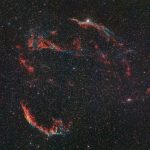
In 1947, the idea that some massive stars could have large-scale magnetic fields near their surface was established, but the origin of these fields has since remained a mystery. Today, it’s known that the strongest magnetic fields ever detected in the Universe come from magnetars, but we still aren’t sure where these magnetars come from or how they get their strong magnetic fields. Though, astrophysicists Sebastian Ohlmann from the Max Planck Society in Germany and Friedrich Röpke from the Heidelberg Institute for Theoretical Studies in Germany may have found out how magnetars form.
The Strongest Magnetic Field in the Universe Has Been Studied
The study used AREPO dynamic simulation code, large and complex computer simulations, to analyze what happens when magnetars are produced. Magnetars are really hard to study, as their eruptions of magnetic energy can only last for seconds to minutes. Ohlmann and Röpke went into the study knowing the collision of two stars can produce a massive star with a particularly strong magnetic field. As it eventually dies and goes supernova, it could end up becoming an exceptionally magnetic neutron star — a magnetar.
This isn’t new information. What’s new, however, is that they have found evidence to support it by using the AREPO on Tau Scorpii, a magnetic star some 500 light-years away from earth. A magnetar’s magnetic field is thought to be “up to one hundred million times stronger than the strongest magnetic field ever produced by humans,” says Röpke.
They found that about one in 10 stars with a mass more than 1.5 times that of the Sun show strong magnetic fields, which matches the predicted fraction of massive stars that are the products of stellar mergers. These results also showed that the notable turbulence of the collision of two stars could possibly lead to strong magnetic fields found around Tau Scorpii.
Read More About New Discoveries With Apex Magnets
This study might explain other unexplained phenomena, such as fast radio bursts, according to a study published in Nature. To stay up-to-date on this story and others like it, subscribe to our monthly newsletter.
-
Ferrofluid Magnetic Liquid ***1 Ounce***

- 1oz bottle of Ferrofluid
- This liquid responds to magnets and magnetic fields
- Mineral oil based product
- SKU# FF1oz
$20.99 As low as $16.79 -
Magnetic Pole Searcher/Finder

- 1 North/South Pole Magnet Identifier
- The unit consists of a small alnico bar magnet that is gimbal mounted
- SKU# MPS
$10.99
