
How Meteors Magnetize the Moon
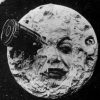
If you thought that the Moon and magnetism don't go hand-in-hand, think again. 2017 satellite findings suggest that the Moon has magnetic anomalies, but how? While the moon doesn't have its own magnetic field, it's believed that the lunar rock orbiting our planet possesses magnetism partly from meteor impacts, a hypothesis that is still debated, and largely from a magnetic field the Moon had early in its history. As its countless craters indicate, the moon is constantly struck with meteors and other space debris. But there's more than an empty space that lies within these impact basins.
The Moon’s Magnetism
We’ve covered the moon’s magnetism before on this blog. Because it likely formed from material that came from early Earth, much of the moon’s mineral makeup is the same as our planet. That means iron. Lots and lots of iron. Iron is a ferromagnetic metal and thus produces a magnetic field. However, this requires a dynamo (the churning of electrically conductive molten metal in the core, driven by heat loss, that generates and sustains the field). Unfortunately, as the core cooled, the dynamo shut down. In turn, this means the moon lost its magnetic field.
However, just because the moon is no longer churning out a magnetic field doesn’t mean there isn’t a good deal of residual magnetism. Satellite measurements have detected magnetic anomalies in the lunar crust, some of them near large impact basins. But how?
Here Come the Magnetic Meteors
Meteors are a common sight in the solar system. These little chunks of rock hurl through the vacuum of space until a planet or moon’s gravity pulls them in. So why isn’t the earth’s surface pocked with craters? It’s all thanks to our atmosphere. Due to the right cocktail of atmospheric gases, most meteors simply burn up before posing any danger to the planet below. However, the moon does not have an atmosphere, making it an open target for all those meteors.
Since the meteors aren't stopped by an atmosphere, they make it to the moon’s surface far more often. That’s why the moon has so many craters. Some of these meteors contain iron-nickel metal and are magnetic. As they slam into the moon, the impact can heat the rock and the ground below to very high temperatures, in some cases enough to melt them. Once rock is heated above the Curie point, where its magnetism is lost, and then cools in an ambient magnetic field, it acquires a new magnetic alignment.
One idea is that bigger craters could be more magnetic if larger impacts heated more rock. This hypothesis may help explain the anomalies, but it is not settled. For a long time, scientists have been perplexed by the moon’s numerous magnetic anomalies.
What to learn more about the wide world of magnetism? Visit the Magnets in the News section of our blog!
-
Magnetic Pole Searcher/Finder

- 1 North/South Pole Magnet Identifier
- The unit consists of a small alnico bar magnet that is gimbal mounted
- SKU# MPS
$10.99
