
This Superconducting Magnet Just Broke The Strongest Magnetic Field Record
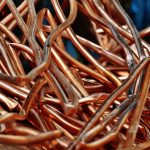
A new superconducting magnet, created by National High Magnetic Field Laboratory (MagLab) at Florida State University, has briefly sustained a record-breaking 45.5-tesla magnetic field intensity. MagLab also produced the world’s previous strongest continuous field intensity, which held the top spot at 45-tesla since 1999.
To put this into perspective, the magnetic field intensity of a standard fridge magnet is about one percent of a single tesla, while a hospital MRI is typically 1.5 to 3 teslas.
Current Superconductors
The problem with conventional superconductors lies in their circuits – when they heat up, they can experience a sudden jump in resistance called quench. This is the sudden loss of superconductivity when the temperature is raised. During quenching, gaseous helium can also be released, so, quenching is not ideal.
With this new model, the magnet is not insulated, but tightly wound strips are used to dissipate some of this heat. The strips are made from a ceramic called rare earth barium copper oxide (REBCO). The REBCO strips can conduct electrical current with virtually no resistance. “The fact that the turns of the coils are not insulated from each other means they can share current very easily and effectively to bypass previous obstacles,” says materials scientist David Larbalestier. REBCO can carry more than twice the amount of current as the same sized section of previously used niobium-based superconductor.
The current 45T hybrid magnet was the strongest working magnet when this was written in 2019, as the new model had only been achieved in trials. In 2022 a hybrid magnet at the Steady High Magnetic Field Facility in Hefei, China, reached a steady 45.22 T, and in 2025 Chinese researchers reported 35.1 T with a fully superconducting magnet. The newer model is small enough to fit in a pint glass, weighing less than 1 pound -- .86 pounds (390 grams) to be exact. Its appearance has been described as “a short stack of ‘pancake’ flat discs wrapped in thin metal strips,” while the previous version had a “resistive” electromagnet and had bulkier copper heat sinks.
What This Means
The limits of superconducting magnets are constantly being tested. Even this small increase in magnetic field strength can mean huge things for high-field applications as strong magnetic fields are required in medicine (MRIs), pharmaceutical research (nuclear magnetic resonance), and other scientific and industrial settings.
MagLab scientists say that, theoretically, REBCO can operate in fields substantially higher than the 45.5 T reached in this test. Engineer Seungyong Hahn says that because of the design’s compact nature, “we are really opening up a new door. This technology has very good potential to entirely change the horizons of high-field applications. This is indeed a miniaturization milestone that could potentially do for magnets what silicon has done for electronics.” Silicon is a semiconductor used in almost all electronics from supercomputers to smartphones to microwaves. Without silicon wafers, most electronic devices used every day wouldn’t be possible.
Magnet News From Apex Magnets
The uses of superconducting magnets have been a hot topic lately. Check out our previous article about superconductors being used in wind turbines or how planes are using superconducting magnets while in the sky. For the latest magnet news delivered straight to your inbox every month, be sure to subscribe to our newsletter.
-
Pyrolytic Graphite Magnetic Levitation Kit

- Complete kit to demonstrate diamagnetic levitation.
- Includes (4) 1/2x1/2x1/4 Neodymium block magnets and (1) piece of 1cm x 1cm x 05.mm pyrolytic graphite.
- Pyrolytic graphite is a unique form of graphite produced by decomposition of a hydrocarbon gas, typically methane, at very high temperature in a vacuum furnace, resulting in an ultra-pure product near theoretical density and extremely anisotropic
- SKU# PGMLK
$39.99 -
Buzzing Ball Hematite Sphere Magnets "Rattlesnake Eggs"

- 1" diameter · 25.4 mm
- 2 magnets2 pcs
- SKU MhemSP
per pack · $3.00 per magnetSpecial Price $5.99 Regular Price $8.99 -
1/2 x 1/8 x 1/8 Inch Neodymium Bar Magnet N48 (30 Pack)

- 1/2" × 1/8" × 1/8" · 12.7 × 3.18 × 3.18 mm · Diametric
- 1.34 lb pull per magnetpull each
- 30 magnets30 pcs
- SKU M121818BR
per pack · $0.43 per magnet$12.99 As low as $9.09