
Superconducting Magnets Make High-Powered MRI Possible

As medicine advances with the use of strong magnets, physicians are now capable of performing more complex imaging procedures. Magnetic resonance imaging (MRI) scanner that has been augmented by enhanced magnetic fields has the power to improve the quality of brain scanning techniques.
How magnetic fields are shaping medical history
IEEE Spectrum reported that superconducting magnets, such as the 11.75 T magnet designed for the INUMAC scanner, are described as strong enough to lift a 60-metric-ton battle tank. Although the imagery is intimidating, these forces are being carefully harnessed by medical equipment developers to capture high-quality scans of the human brain. Most clinical MRI scanners operate at 1.5 or 3 teslas (T). The CEA's 11.7 T Iseult research scanner, the project reported in 2013 at 11.75 T, produced its first in vivo human brain images in 2024.
According to the source, the Large Hadron Collider, the apparatus responsible for the discovery of the Higgs boson particle in Switzerland, can produce a magnetic field of about 8.3 T, which is significantly stronger than your average cube magnets or sphere magnets. The anticipated power of the new MRI equipment will outpace the strength of the equipment that allowed CERN to make one of the biggest discoveries in modern science.
"We're pretty proud of having met all the requirements, plus given them a little extra," Hem Kanithi, vice president of business development at Luvata, the company that built the superconductor, told the news provider.
The reason high-powered imagery equipment is crucial in medicine has to do with the treatment of illnesses that occur beneath the skin, in very small spaces. For example, the news provider noted that current brain scans can resolve about one millimeter of tissue, covering roughly 10,000 neurons, with a time resolution of about one second. With the introduction of stronger magnetic fields, it will be possible to narrow the scope of the scans. This will enable physicians to see the cause of distress with much more precision.
Preparing for the new technologies
Minnesota Daily reported in 2013 that it was difficult to support magnetic imagery technologies because of a global helium shortage. This element is essential in the process because it provides a cooling agent to the machinery. With all the available required parts, the source noted that researchers can continue upgrading imaging quality in MRI equipment.
The superconducting coils must be kept at about 4 kelvin (-269 C), and even small heat leaks can make them lose superconductivity. For this reason, an adequate cooling agent was the first step toward completing the MRI project.
Get The Latest Magnetic News With Apex
We are constantly on the lookout for new magnet discoveries. To be in the know about magnets, magnetic breakthroughs, and industry news (as well as getting some really great discounts), subscribe to our newsletter, or check out our blog.
-
Gauss Spectrum Magnetic Field Viewer Film - 8 x 11.75
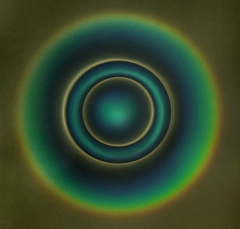
- 1 Piece Gauss Spectrum Magnetic Field Viewer Film
- Display relative gauss strength in a spectrum of color
- SKU# GSVF
$54.99 As low as $46.74 -
Buzzing Ball Hematite Sphere Magnets "Rattlesnake Eggs"

- 1" diameter · 25.4 mm
- 2 magnets2 pcs
- SKU MhemSP
per pack · $3.00 per magnetSpecial Price $5.99 Regular Price $8.99 -
Ferrofluid Magnetic Liquid ***1 Ounce***

- 1oz bottle of Ferrofluid
- This liquid responds to magnets and magnetic fields
- Mineral oil based product
- SKU# FF1oz
$20.99 As low as $16.79