
The Impacts of Solar Explosions On Earth’s Magnetic Field
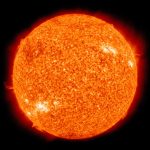
Otherwise known as CMEs, coronal mass ejections are a solar phenomenon where the sun’s outer layer (the corona), expels a large amount of plasma and magnetic field into outer space. CMEs occur when the sun’s constant stream of plasma churns and twists around itself, leading to the formation of magnetic knots. As these magnetic knots develop, they build up massive amounts of energy, forcing them to break off and hurl into space, potentially toward earth. So, why don’t we typically notice such an event? If you remember back to our blog discussing the magnetic fields of our solar system, earth’s magnetic field protects our planet from harmful particles, similar to the concept of how an umbrella protects its user from rain. Earth’s magnetic field deflects the blast of CMEs and other solar events, funneling the charged particles toward the North and South poles, which leads to brilliant aurora light displays.
If, however, a solar storm is large enough, the earth could experience devastating effects such as electricity and radio blackouts, or even the complete destruction of the power grid entirely. Although unlikely, similar events have occurred in the past, providing insight into what the future may hold. In 1859, The Carrington Event, otherwise known as the largest solar hurricane on record, hit the earth. However, the effects were far from minor for the technology of the day: telegraph lines were disrupted, and some telegraph offices reported sparking and fires. Quebec was not as fortunate in 1989 when a geomagnetic storm hit, resulting in the failure of their power grid. Most recently, in 2012, a solar hurricane as powerful as The Carrington Event narrowly missed earth to the relief of engineers everywhere.
Preventing Devastating Effects On Our Planet
Although we cannot prevent solar storms, we can reduce many of their potentially devastating side effects. Engineers and physicists are experts at predicting the likelihood of solar storms and implementing preventative measures like taking transformers and substations offline to avoid the damage that geomagnetically induced currents can cause, such as overheating and permanently damaging transformers. With the inevitable reality that solar storms will continue to collide with the earth, engineers are working to take a proactive approach to enhance our power grid, ensuring we are well equipped to manage these storms with minimal impacts on daily life.
Explore The Vast Implications Of Magnetism In Our Solar System At Our Blog
Magnets affect nearly every facet of our universe, from their implications in protecting our planet from dangerous solar storms to their invaluable use in life-saving medical devices, our world depends on their unique properties. Harness the power of magnets for your business, home, or school when you visit our website. Have a question? Contact us anytime for expert advice!
-
Buzzing Ball Hematite Sphere Magnets "Rattlesnake Eggs"

- 1" diameter · 25.4 mm
- 2 magnets2 pcs
- SKU MhemSP
per pack · $3.00 per magnetSpecial Price $5.99 Regular Price $8.99 -
Pyrolytic Graphite Magnetic Levitation Kit

- Complete kit to demonstrate diamagnetic levitation.
- Includes (4) 1/2x1/2x1/4 Neodymium block magnets and (1) piece of 1cm x 1cm x 05.mm pyrolytic graphite.
- Pyrolytic graphite is a unique form of graphite produced by decomposition of a hydrocarbon gas, typically methane, at very high temperature in a vacuum furnace, resulting in an ultra-pure product near theoretical density and extremely anisotropic
- SKU# PGMLK
$39.99 -
Magnetic Pole Searcher/Finder

- 1 North/South Pole Magnet Identifier
- The unit consists of a small alnico bar magnet that is gimbal mounted
- SKU# MPS
$10.99