
The Technology Behind the Magnetic Levitation Train
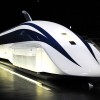
You may have heard of Japan’s Maglev Train-also known as the fastest floating train in the world, with a test-run record of 375 miles per hour (603 km/h) set in 2015 and a planned passenger speed of about 310 miles per hour. So far, maglev trains carry passengers in only a few countries, including China and Japan (where the high-speed Chuo Shinkansen line is still under construction and has not opened), but 2014 reports suggested that the impressive floating train technology could make its way to the U.S.
How it Works
The Maglev is named for the concept that it is built on: magnetic levitation. Magnetic levitation, the levitation of an object using natural magnetic fields, looks like magic but is actually based on some practical science and physics concepts and principles. Superconductivity and magnetism are some of the main principles behind maglev technology. When cooled to very low temperatures some materials have zero electrical resistance and also expel magnetic fields (the Meissner effect). In Japan's maglev, superconducting electromagnets on the train induce currents in coils along the guideway walls, and the resulting magnetic forces lift and guide the train once it reaches speed.There are two notable magnetic levitation technologies relevant to the Maglev.
- Electromagnetic Suspension - uses electronically controlled electromagnets in the train to attract to a track made of ferrous material, usually steel. This method is based on magnetic attraction.
- Electrodynamic Suspension - uses superconducting electromagnets or strong permanent magnets to create a magnetic field to push and pull the train using currents. This method is based on magnetic repulsion and powers Japanese maglev transport.
A proposed Maglev train line would have run from Washington D.C.to Baltimore. Some hope to eventually connect New York to D.C. with a line that would make travel time estimates an hour and 40 minutes less than Amtrak's Acela trains, according to 2014 reports. In 2014 there was no official decision on whether the maglev train would be coming to the U.S., but Japan has offered to bring the technology to the States with no licensing fee and unofficially proposed supporting the project with a $5 billion loan, according to 2014 reports. The Baltimore-Washington project has since been cancelled: the Federal Railroad Administration rescinded its environmental review notice in July 2025 and the U.S. Department of Transportation canceled the remaining federal grants.
Discover More With Apex Magnets
Want to stay up-to-date on the latest magnetic discoveries? Sign up for our newsletter to get these stories and more sent straight to your inbox each month. Photo source: Daylight9899-
Pyrolytic Graphite Magnetic Levitation Kit

- Complete kit to demonstrate diamagnetic levitation.
- Includes (4) 1/2x1/2x1/4 Neodymium block magnets and (1) piece of 1cm x 1cm x 05.mm pyrolytic graphite.
- Pyrolytic graphite is a unique form of graphite produced by decomposition of a hydrocarbon gas, typically methane, at very high temperature in a vacuum furnace, resulting in an ultra-pure product near theoretical density and extremely anisotropic
- SKU# PGMLK
$39.99 -
Magnetic Levitation Pen Science Experiment Kit

Make your own stable levitating pen with this economical, easy to build levitating pen kit! Make use of the principles of magnetic repulsion to seemingly defy the law of gravity. Great for classroom demonstrations!
$10.99 -
Pyrolytic Graphite Block - Small

- Pyrolytic graphite is a unique form of graphite produced by decomposition of a hydrocarbon gas, typically methane, at very high temperature in a vacuum furnace, resulting in an ultra-pure product near theoretical density and extremely anisotropic
- 1cm x 1cm x 0.5 mm
- SKU# Pyrolytic Graphite Block - Small
$35.99