
Two More Things You May Not Know About Earth’s Magnetic Field

In our last blog post, we talked about how the Earth’s magnetic field is dented — remember, we’re safe from any effects this dent has on the ground! — and how the magnetic field has reversed… hundreds of times! Again, the magnetic field reversing may seem alarming — many ‘doomsday’ theories come from the fear of pole reversal — but, rest assured, it doesn’t signify the end of the world. Now, we have two more magnetic phenomena to share — geodynamo paradox and geomagnetic jerks!
“The Iron Heart”
We know the Earth’s magnetic field is important, but what do we know about the origins and evolution of the “magnetic bubble” that keeps Earth habitable? Well, we know it has to do with Earth’s core, otherwise known as the heart of the planet.
The core is made up of molten metals that are constantly in motion. At the core, there’s a liquid outer layer consisting of iron that's burning as hot as the surface of the Sun—that’s about 9,800 degrees Fahrenheit! Then, at the very center lies a small, hardened inner core that grows as Earth cools. The Earth’s constant need to cool itself, and thus convect, is what drives our planet’s electric generator — it is this generator that produces the self-sustaining magnetic field. This process of heat transfer is referred to as the geodynamo. Though, the answer can’t be as easy as that.
Therein lies the paradox of the geodynamo. According to theoretical analyses, the thermal conductivity of iron at the core is 150 watts per meter per kelvin. However, such a high conductivity would leave little energy to power convection, and later laboratory measurements gave lower values (about 90 W/m/K in one study and about 30 in another), so the true value is still debated. A high value would also imply that the solid inner core is less than about 1 billion years old, which makes it hard to explain how the geodynamo ran in earlier times, since other studies indicate it has operated for about 3.4 billion years. You can read more about this paradox here.
Geomagnetic Jerks
Another seemingly unsolved mystery of Earth’s magnetism lies within geomagnetic jerks. We’ve covered geomagnetic jerks before, which you can read about here. Essentially, they are abrupt changes in the strength of Earth’s magnetic field, resulting in pulses that like the anomaly (which we talked about here) can compromise satellites. These jerks are not predictable — in fact, jerks occur at irregular intervals and vary in strength from place to place.
As scientists further observe these jerks, they’re finding out more and more. By studying strange deviations in the magnetic field, specifically, changes in the magnetic field’s direction and strength over time, scientists have discovered that occasionally, the gradual westward drift of the magnetic field speeds up abruptly, and the drift of the magnetic field goes in another direction — this is where the geomagnetic jerks come in. Though the jerks are random and hard to track, they’ve been able to plot the magnetic field’s rate of change over time — seeing that these jerks usually last between 1-3 years, with the first documented one being recorded in 1902. Recent jerks have been identified around 2014 and 2016–2017, and because jerks are irregular and can only be confirmed years afterward, scientists cannot say when the next one will occur. One study had predicted for 2020 or 2021.
Discover More With Apex Magnets
There you have it! To stay up to date on the latest magnetic discoveries, keep an eye on our news & how-to’s section of the blog. And, to make sure you don’t miss a thing, subscribe to our monthly newsletter!
-
3/4 x 1/8 Inch North Pole Marked Neodymium Disc Magnet N48 (10 Pack)

- 3/4" × 1/8" · 19.05 × 3.18 mm
- 11.1 lb pull per magnetpull each
- 10 magnets10 pcs
- SKU M34x18NDI
per pack · $1.50 per magnet$14.99 As low as $10.49 -
Gauss Spectrum Magnetic Field Viewer Film - 8 x 11.75
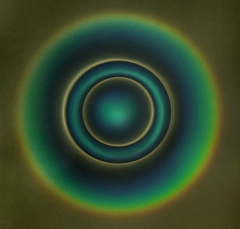
- 1 Piece Gauss Spectrum Magnetic Field Viewer Film
- Display relative gauss strength in a spectrum of color
- SKU# GSVF
$54.99 As low as $46.74